📋 Table of Contents
Bigger is better, right? It’s the instinct almost every new owner has when buying a crate — size up so the puppy “has room to grow into it,” maybe even skip the small starter size entirely. It’s also backwards. A crate that’s too large defeats the entire point of crate training: a puppy will happily use one end of an oversized crate as a bathroom and the other end to sleep, which is exactly the association a properly sized crate is designed to prevent. Getting this one detail wrong in week one can add weeks to house training. It’s a small example of a bigger pattern — most of the mistakes that make the first month with a puppy harder than it needs to be are decided before the puppy ever walks through the door.
This checklist covers what to actually buy, prepare, and do before pickup day, plus a structured plan for the first 48 hours that sets the tone for everything that follows. None of it requires a perfectly styled nursery-level setup — it requires the handful of details, done correctly and in the right order, that actually determine how smoothly the first month goes.
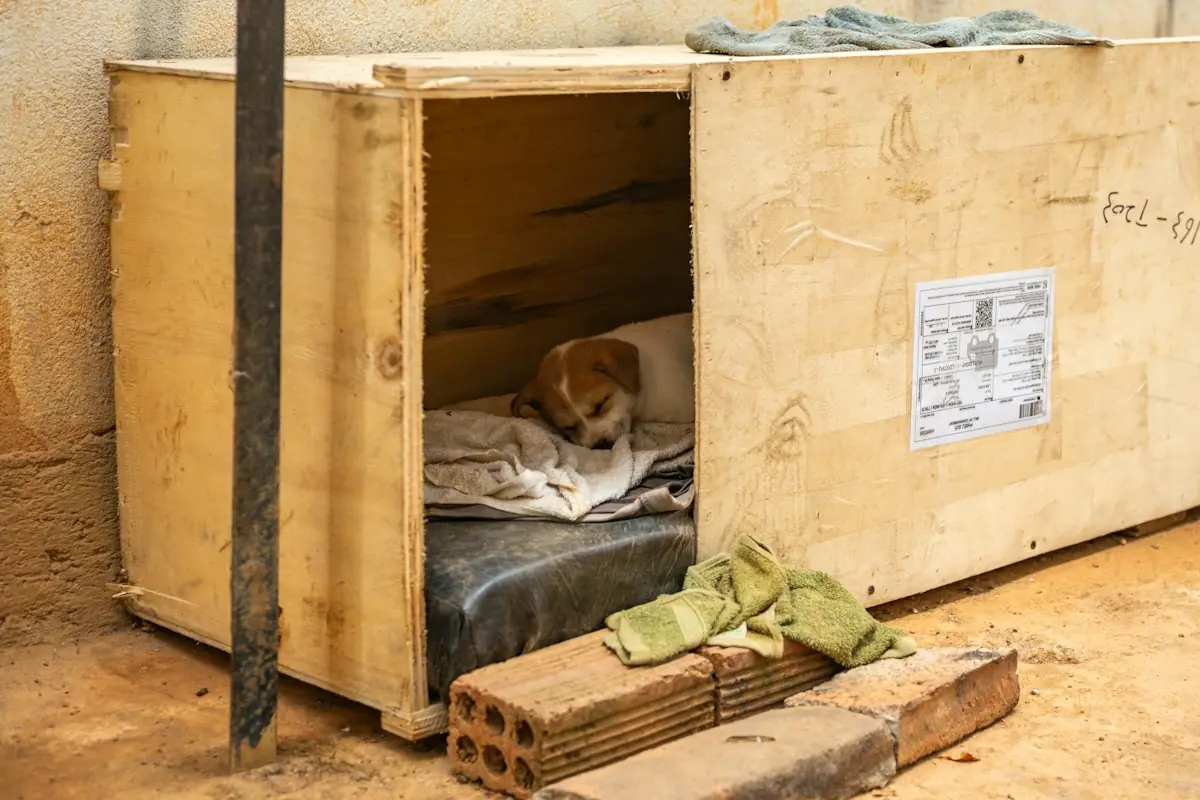
Crate Setup: Getting the Size Right
The correct size is just large enough for the puppy to stand up, turn around fully, and lie down stretched out — not more. For growing breeds, buy a crate sized for their adult dimensions and use a divider panel to shrink the usable space down to puppy-appropriate now, expanding it in stages as they grow. This is meaningfully cheaper than buying multiple crates and gets the sizing right at every stage instead of just the end stage.
- Line it with washable, chew-resistant fleece or a machine-washable pad — skip fluffy bedding with loose fiberfill early on, since puppies readily chew and swallow the stuffing
- Place the crate somewhere it can be part of the household, not isolated in a back room — puppies do better with a crate near normal family activity, at least initially
- Start crate association on day one, before any negative experience has a chance to attach to it — it’s considerably harder to build a positive association after a puppy has already slept in your bed for a week and now sees the crate as a demotion
Essential Supplies
Feeding
- Stainless steel bowls — more hygienic than plastic, which develops a bacterial film in scratches over time; two bowls minimum
- The same food the puppy is already eating — ask the breeder or shelter directly and match it for the first week or two. A sudden diet switch on top of the stress of a new home is a reliable way to trigger digestive upset. Transition to a different food gradually over 7–10 days if you want to switch, mixing in increasing ratios.
- A measuring cup — always measure, never eyeball. Our food portion calculator gives an exact daily amount by weight and age, and the puppy feeding guide covers how meal frequency should change over the first year.
Walking and ID
- Flat buckle collar with an ID tag — engraved with your cell number on day one, not “once we’ve settled in.” Check the fit weekly; puppies outgrow collars faster than most owners expect.
- 4–6 foot standard leash. Skip retractable leashes for puppies entirely — they actively teach pulling and offer no real control in an emergency.
- Front-clip harness for breeds prone to pulling. Avoid choke chains, prong collars, and shock collars regardless of age.
- A crash-tested car restraint for every car trip from the first ride home
Health and Grooming
- Dog-specific nail clippers — begin handling paws from day one even before actual trimming starts, so the handling itself is already familiar
- Puppy-formula shampoo — adult formulas can be too harsh for young skin
- A soft brush, introduced from day one regardless of coat type, to build early tolerance for grooming handling
- Enzymatic stain and odor remover — buy this before pickup day, not after the first accident, since regular cleaners don’t fully break down the compounds that draw a puppy back to the same spot
- Ask your vet which flea/tick products are safe at your puppy’s specific age and weight — several common products have minimum age or weight thresholds
Training and Enrichment
- Pea-sized, soft training treats — you’ll be giving a lot of them per session, and soft treats reward faster than biscuits that need chewing
- 4–5 different chew toy types (rubber, rope, hard nylon, bully sticks), rotated to maintain interest and give your puppy an approved outlet before they find their own
- A food puzzle or stuffed Kong — 20+ minutes of independent mental engagement, and a strong early tool for building positive alone-time and crate association simultaneously
Room-by-Room Puppy-Proofing
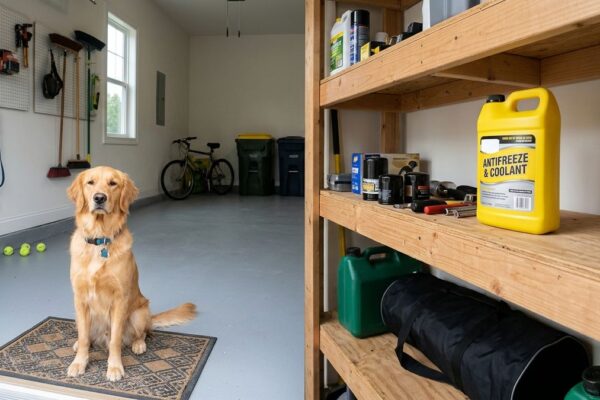
Hazard Removal
- Cables and chargers — route out of reach or cover; puppies chew indiscriminately in the first few months
- Toxic plants — check every houseplant against a toxic plant list before pickup day. Common problem plants include lilies (severe toxicity, especially to cats in the household), pothos, philodendron, sago palm, and aloe vera.
- Medications and cleaning products — locked cabinets or genuinely out of reach, not just “up high,” since puppies are more agile climbers than owners expect
- Small swallowable objects — coins, batteries, kids’ toys, rubber bands, hair ties, socks
- Trash cans — lidded or cabinet-enclosed
- Stairs — baby gates until the puppy is coordinated and old enough to navigate them safely
Escape-Proofing
- Walk the fence line checking for gaps — puppies fit through smaller openings than seems physically possible
- Puppy-proof latches on all exterior gates
- Pool and water feature barriers, or full supervision — drowning risk is real and underestimated for small puppies
Before Pickup Day: The Administrative Checklist
- Schedule the first vet visit for within 48–72 hours of coming home
- Research puppy socialization classes in your area now — good ones fill up, and the critical socialization window closes around 12–14 weeks, which doesn’t leave room to wait
- Get complete vaccination and deworming records from the breeder or shelter to hand to your new vet
- Set up microchip registration (or transfer existing registration into your name and contact details)
- Decide on pet insurance before the first vet visit happens — enrolling before anything is documented avoids pre-existing condition exclusions later. Our pet insurance guide walks through how that exclusion actually works.
Setting Up Other Pets and Kids for Success
If there’s already a resident dog, cat, or child in the home, a little advance planning avoids the rockiest version of that first introduction. Keep the first meeting with a resident dog on neutral ground if possible — a front yard rather than the resident dog’s own space — and short. For cats, plan on a slow, separated introduction over days, not a same-day meeting; cats generally do far better with scent swapping and gradual visual access before direct contact. With children, decide the household rules before pickup day — no picking the puppy up without supervision, no waking a sleeping puppy, a hand signal for “give the puppy space” — since it’s much easier to start with the rule than retrofit it after a nip during an overexcited moment.
What to Bring to the First Vet Visit
Walking in prepared makes this first appointment far more useful than a quick once-over:
- All records from the breeder or shelter — vaccination dates and products used, deworming history, and any known health issues in the litter
- A fresh stool sample, if you can manage it, collected within a few hours of the visit — most first visits include a parasite screen, and a fresh sample is more reliable than one collected the night before
- A list of questions written down in advance — it’s easy to blank in the moment. Worth asking: the full vaccine schedule going forward, when to start heartworm/flea/tick prevention, spay/neuter timing, and what’s normal vs. concerning for your specific breed
- Notes on anything you’ve already observed — appetite, energy, stool consistency, any coughing or sneezing since bringing the puppy home
If you haven’t settled on a vet yet, our guide to choosing a vet covers what to ask before you commit to a clinic long-term.
What “Normal” Looks Like Over the First Two Weeks
New owners often can’t tell whether a rough patch is expected adjustment or an actual problem. Having a rough timeline in mind helps you tell the difference in the moment rather than panicking or, just as often, dismissing something that actually needs attention.
| Timeframe | 🐾 Typical | 🚩 Worth a Vet Call |
|---|---|---|
| Night 1–2 | Some whining at crate time, 1–2 nighttime potty trips, mild appetite dip from stress | Complete refusal to eat or drink for 24+ hours, repeated vomiting, lethargy |
| Days 3–7 | Loose stool from the diet/environment change, occasional potty accidents indoors, clinginess | Diarrhea with blood, persistent lethargy, visible pain when touched |
| Week 2 | Settling into a feeding and sleep rhythm, increasing confidence exploring the home | No improvement in house training progress at all, ongoing appetite loss |
A little regression is normal, especially around day 3–4 once the initial adrenaline of a new environment wears off and the reality of a strange place actually sets in for the puppy. Consistency through that dip, not escalation of rules or punishment, is what gets most puppies through it within the first two weeks.
Breeder, Shelter, or Rescue: What Changes About Your Prep
Where your puppy comes from changes a few practical details worth planning around in advance:
- From a reputable breeder: you’ll typically get a clear health and vaccination history, a known feeding schedule and food brand to match initially, and sometimes a health guarantee — ask for all of this in writing before pickup day, not after.
- From a shelter or rescue: history is often partial or unknown, including age, breed mix, and full vaccination status. Budget for a more thorough first vet visit, including titers or restarting a vaccine series if records are incomplete, and go in expecting a wider range of “normal” adjustment behavior since the puppy’s early history is a bigger unknown.
- Either way: ask directly what the puppy has been eating and get at least a small bag or sample of it if possible — matching this exactly for the first week removes one major variable from an already disruptive transition.
The First 48 Hours: A Structured Plan
Hour 1–6: Arrival
- Keep the arrival calm — limit visitors to immediate household members. A crowd of excited strangers on day one sets an overstimulating tone that’s hard to walk back.
- Show the puppy the crate, water bowl, and designated potty spot immediately, in that order
- Take the puppy outside to the potty spot within the first 30 minutes and every hour after, rewarding immediately when they go
Hours 6–24: First Night
- Begin crate sleeping tonight, not “once they’ve settled in” — starting late makes the transition harder, not easier
- Expect at least one nighttime potty trip for young puppies — take them out, keep it low-key and quiet, straight back to the crate afterward with no play
- Don’t panic over normal first-night whining — a short adjustment period is expected; a consistent, calm response (rather than immediately caving and moving the crate to the bed) pays off within days
Days 2–7: Building Routine
- Feed at consistent set times rather than free-feeding — predictable input makes potty timing predictable too
- Start name recognition immediately: say the name, reward any eye contact
- Introduce one basic command — “sit” is the standard starting point — in short 2–3 minute sessions with a high rate of reward
- Begin short, positive car trips to build comfort before it’s needed for a longer trip
- Start controlled socialization outings even before the vaccine series is complete — carried, or in areas away from unknown dogs, per our socialization guide
- American Veterinary Medical Association — Selecting a Pet Dog
🛠️ Free Tools: Food Portion Calculator · Vaccination Schedule · Name Generator · Puppy Health Checklist
Use our science-based calculators to put this advice into action instantly.